
Executive Summary:
- “The practice of medicine was deregulated during the first half of the 1800s.” This period saw the growth of new schools of thought about how to practice medicine.
- States began to repeal medical licensing laws, and by 1849, only New Jersey and the District of Columbia had anything close to a medical practice law.
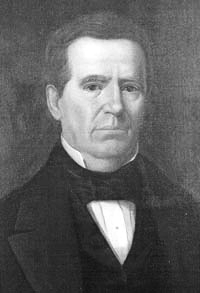
- In 1837, the Medical Practice Act of Texas was written by Dr. Anson Jones, one of the few formally trained physicians in Texas at that time. He was also a congressman and the last president of the Republic of Texas.
- December 14, 1837, The Congress of the Republic of Texas then created the Board of Medical Censors for the purposes of granting licenses to practice medicine and surgery in the Republic.
- March 7, 1845, D. D. Palmer was born in what is now Ontario, Canada.
- 1847: “Recognizing that the problems in both medical training and the practice of medicine were damaging their professional status, physicians practicing traditional medicine began to seek ways to standardize the practice of medicine and to assure that traditional practitioners met the standards. In response to the New York State Medical Society’s call for a national meeting of medical societies, the American Medical Association (AMA) emerged in 1847. One of AMAs first actions was to accept a code of ethics that distinguished traditional doctors from ‘new school’ doctors’."
- 1848: The Board of Medical Censors created in Texas in 1837 was discontinued by legislative act in 1848. There was no medical regulation in Texas until 1873 – 25 years later.
- 1853: Thirty-five medical physicians from eighteen counties assembled in Austin on January 17, 1853 to organize the Texas Medical Association, which they charted with the state as The Medical Association of Texas. Their constitution of 1853 allowed "every gentleman of the Medical Profession" to become a member, but irregularly trained doctors were specifically excluded. It was inactive for the next sixteen years. It can be said that the medical profession allowed no competition, and tolerated no new ideas other than those conforming to orthodox medical training. New thoughts could be, and usually were, condemned as quackery.
- February 1, 1861: Texas Secedes from the Union and joins the Confederacy.
- May 12-13, 1865: Battle of Palmito Ranch: In far south Texas is the last land battle of the civil war with casualties and ends with a Confederate victory.
- June 2, 1865: Confederate forces west of the Mississippi under Confederate General Edmund Kirby Smith surrenders at Galveston, Texas becoming the last to do so.
- June 19, 1865: The Unions Major General Gordon Granger lands at Galveston, Texas and informs the people of Texas of the Emancipation Proclamation (an event celebrated in modern times each year as Juneteenth and made a federal holiday in 2021).
- 1873; Another medical regulatory act is passed for Texas.
- 1878: A man named Harvey Lillard lost hearing in his left ear after lifting a heavy weight while in a stooped and cramped position.
- September 18, 1895: Harvey Lillard became the first “chiropractic patient” when D. D. Palmer successfully adjusted his spine.
- Late fall 1895, Palmer had developed four methods of adjusting the vertebrae of the spine.
- Summer 1896, Palmer trained a few individuals in the new-school healing art of chiropractic.
- 1898: Chiropractic students of D. D. Palmer in 1898 included Texan Andrew P. Davis, MD, DO, DC, who is the first practicing chiropractic doctor of Texas.
Article:
By Chris Dalrymple, D.C., F.I.C.C
1800: Thirteen of the 16 existing states had given their state medical societies the authority to both examine and license university-trained and apprentice-trained practitioners.
1803: Massachusetts allows Harvard Medical School to license its graduates and other states also began to permit their medical schools to license their graduates creating an "alternative pathway to a medical license encouraging a rapid proliferation of medical schools in the early 1800s. "Those who entered the medical schools were not required to have a high school education, and some of the medical schools provided no more than a few months of training before licensing their graduates. Furthermore, most [medical] schools provided no clinical training."
Written by Chris Dalrymple, DC
 The medical practice act had its roots in the Republic of Texas.
1803: Massachusetts allows Harvard Medical School to license its graduates and other states also began to permit their medical schools to license their graduates creating an "alternative pathway to a medical license encouraging a rapid proliferation of medical schools in the early 1800s. "Those who entered the medical schools were not required to have a high school education, and some of the medical schools provided no more than a few months of training before licensing their graduates. Furthermore, most [medical] schools provided no clinical training."
Written by Chris Dalrymple, DC
Tuesday, August 11, 2015 12:00 AM
The medical practice act had its roots in the Republic of Texas. In 1837, the Medical Practice Act was written by Dr. Anson Jones, doctor, congressman, and the last president of the Republic of Texas. One of the few formally trained physicians in Texas at that time, Jones was licensed to practice in 1820 and received his M.D. degree 7 years later in 1827. In October 1832 he renounced medicine and became a commission merchant in New Orleans, where he lived through cholera and yellow fever epidemics and a series of failures that left him despondent and broke.
In October 1833, at the suggestion of Jeremiah Brown, Jones drifted to Texas. During the First Congress of the republic, Jones became increasingly interested in public questions and critical of congressional policies. He was elected a representative to the Second Congress where he helped formulate legislation to regulate medical practice and advocated a uniform system of education and an endowment for a university.
The Congress of the Republic of Texas then created the Board of Medical Censors on December 14, 1837 for the purposes of granting licenses to practice medicine and surgery in the republic. The board was scheduled to meet once each year, but difficulty of transportation over long distances and Indian attacks frequently prevented annual meetings.
The law required that the board be composed of one physician from each senatorial district and that the members be graduates of medicine and surgery from authorized colleges and universities. A twenty-dollar fee was collected from those who passed an examination. Without a license, physicians could not collect unpaid fees in court.
One financial conversion website notes that $20 in 1837 was the approximate equivalent of $400 to $500 in current dollars.
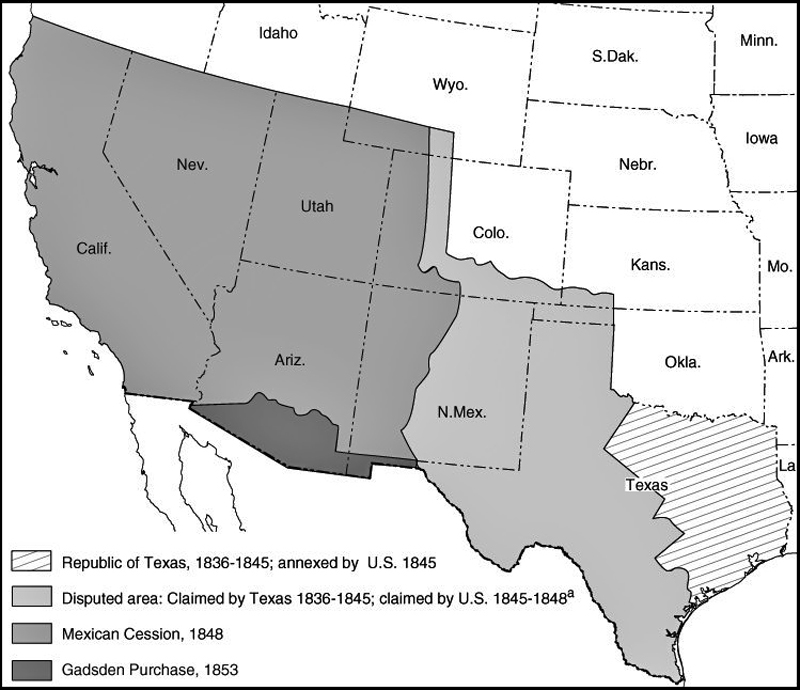
How the future USA looked in 1837:
Anson Jones declined candidacy for the vice presidency in the election of 1841, in which Houston again became president. Both Houston and Jones later claimed to have devised the foreign policy followed by Texas after 1841 agreeing on the purpose of getting an offer of annexation from the United States or getting an acknowledgment of Texas independence from Mexico. Jones was elected president of Texas in September 1844 and took office on December 9.
In 1845 Jones promised to obtain from Mexico recognition of Texas independence and delayed calling the Texas Congress or a convention. Meanwhile, public sentiment for annexation and resentment against Jones mounted. He was burned in effigy, and threats were made to overthrow his government, but he remained silent until Charles Elliot returned from Mexico with the treaty of recognition.

On March 7, 1845 D. D. Palmer was born in what is now Ontario, Canada.
On June 4, 1845, Jones presented to the people of Texas the alternative of peace and independence or annexation. The Texas Congress rejected the treaty with Mexico, approved the joint resolution of annexation, and adopted resolutions censuring Jones. The Republic of Texas was annexed to the United States of America, becoming the 28th U.S. state.
Border disputes between the new state and Mexico, which had never recognized Texas independence and still considered the area a renegade Mexican state, led to the Mexican–American War (1846–1848).
1847: “Recognizing that the problems in both medical training and the practice of medicine were damaging their professional status, physicians practicing traditional medicine began to seek ways to standardize the practice of medicine and to assure that traditional practitioners met the standards. In response to the New York State Medical Society’s call for a national meeting of medical societies, the American Medical Association (AMA) emerged in 1847. One of AMAs first actions was to accept a code of ethics that distinguished traditional doctors from ‘new school’ doctors’."
1848: The Board of Medical Censors created in Texas in 1837 was discontinued by legislative act in 1848. There was no medical regulation in Texas until 1873 – 25 years later.
In Britain, the Public Health Act establishes Boards of Health across England and Wales giving cities broad authority to build modern sanitary systems. It is the nation's first public health law.
In Boston, Massachusetts, the first medical school for women, The Boston Female Medical School, opens.
Around the world in 1848: The Mexican–American War formally ends with signing of the Treaty of Guadalupe Hidalgo, ceding virtually all of what becomes the Southwestern United States to the U.S.The Independent Republic of Yucatán joins Mexico in exchange for Mexican help in suppressing a revolt by the indigenous Maya population.The New York Herald breaks the news to the East Coast of the United States that there is a gold rush in California.Karl Marx and Friedrich Engels publish The Communist Manifesto (Manifest der Kommunistischen Partei) in London.The Great Famine in Ireland continues (1845–49).

The 35 doctors gathered at the Methodist Episcopal Church South to establish the Texas State Medical Society.
Their constitution of 1853 allowed "every gentleman of the Medical Profession" to become a member, but irregularly trained doctors were specifically excluded.
Without sarcasm or undue editorializing it can be said that the medical profession allowed no competition, and tolerated no new ideas other than those conforming to orthodox medical thinking, in which phrase itself exists a contradiction in terms. New thoughts could be, and usually were, condemned as quackery.
Around the world in 1853: A practical hypodermic syringe is invented.The clothing company Levi Strauss & Co. is founded in the United States.Gadsden Purchase: The United States buys land from Mexico to facilitate railroad building in the Southwest.
Source: https://tshaonline.org/handbook/online/articles/sat05
Around the world in 1848: convenience this organization under its various names will be generally referenced as the TMA.
https://en.wikipedia.org/wiki/1853
http://www.fumcaustin.org/YouAreHere/photogallery.html
The Official History of Chiropractic in Texas, Chapter 12. By: Walter Rhodes D.C.; Texas Chiropractic Association, Austin, Texas, 1978
 |
| Civil War Surgery |
1861 – 1865 –American Civil War
In this entry find significant events of the Civil War Period when little else but bloodshed was occurring...
1861
- January 3 – Delaware votes not to secede from the Union.
- January 9 – Mississippi becomes the second state to secede from the Union, preceding the American Civil War.
- January 10 – Florida secedes from the Union.
- January 11 – Alabama secedes from the Union.
- January 18 – Georgia secedes from the Union.
- January 21 – Jefferson Davis resigns from the United States Senate.
- January 26 – Louisiana secedes from the Union.
- January 29 – Kansas is admitted as the 34th U.S. state.
- February 1 – Texas secedes from the Union.
- February 4 – Delegates from six seceded states meet at the Montgomery Convention in Montgomery, Alabama.
- February 8 – The Confederate States of America adopts the Provisional Confederate States Constitution.
- February 9 – Jefferson Davis is elected the Provisional President of the Confederate States of America by the Weed Convention at Montgomery, Alabama.
- February 11 – The U.S. House unanimously passes a resolution guaranteeing non-interference with slavery in any state.
- February 18 – In Montgomery, Alabama, Jefferson Davis is inaugurated as the provisional president of the Confederate States of America.
- February 23 – President-elect Abraham Lincoln arrives secretly in Washington, D.C. after an assassination attempt in Baltimore.
- February 28 – Colorado is organized as a United States territory.
- March 2 – Nevada is organized as a United States territory.
- March 4 – President Abraham Lincoln takes office, succeeding James Buchanan. The Stars and Bars is adopted as the flag of the Confederate States of America.
- March 11 – The Confederate States Constitution is adopted.
- April 12 – The American Civil War begins at Fort Sumter, South Carolina.
- April 13 – Fort Sumter surrenders to Confederate forces.
- April 17 – The state of Virginia secedes from the Union.
- April 20 – Robert E. Lee resigns his commission in the United States Army in order to command the forces of the state of Virginia.
- April 25 – The Union Army arrives in Washington, D.C.
- April 27 – President Abraham Lincoln suspends the writ of habeas corpus(a recourse in law whereby a person can report an unlawful detention or imprisonment before a court), in the United States. West Virginia secedes from Virginia.
- May 6 – Arkansas secedes from the Union.
- May 7 – Tennessee secedes from the Union.
- May 8 – Richmond, Virginia is named the capital of the Confederate States of America.
- May 20 – Kentucky proclaims its neutrality which lasts until September 3, when Confederate forces enter the state. North Carolina secedes from the Union.
- July 25 – The Crittenden–Johnson Resolution is passed by the U.S. Congress, stating that the war is being fought to preserve the Union and not to end slavery.
- August 5 – In order to help pay for the war effort, the United States government issues the first income tax as part of the Revenue Act of 1861 (3% of all incomes over US $800; rescinded in 1872).
- August 10 – The first major battle west of the Mississippi River, the Battle of Wilson's Creek, is fought, with a Confederate victory.
- October 28 – The Missouri legislature takes up a bill for Missouri's secession from the Union.
- October 30 – The bill is passed for Missouri's secession from the Union.
- October 31 – Missouri's secession from the Union bill is signed by Governor Claiborne Fox Jackson.
- November 6 – Jefferson Davis is elected president of the Confederate States of America.
- November 8 – The USS San Jacinto stops the United Kingdom mail ship Trent and arrests two Confederate envoys, James Mason and John Slidell, sparking a diplomatic crisis between the U.K. and U.S.
- November 28 – Acting on the ordinance passed by the Jackson government, the Confederate Congress admits Missouri as the 12th Confederate state.
- December 10 – Kentucky is accepted into the Confederate States of America.
1862
- January 30 – The first US ironclad warship, the USS Monitor, is launched.
- February 1 – Julia Ward Howe's Battle Hymn of the Republic is published for the first time in the Atlantic Monthly.
- February 6 – General Ulysses S. Grant gives the United States its first victory of the war, by capturing Fort Henry, Tennessee.
- February 22 – Jefferson Davis is officially inaugurated in Richmond, Virginia, to a 6-year term as president of the Confederate States of America.
- March 8 – The iron-clad CSS Virginia (formerly USS Merrimack) is launched at Hampton Roads, Virginia.
- March 8–9 – Battle of Hampton Roads: The first battle between two ironclad warships, the USS Monitor and the CSS Virginia.
- March 13 – The U.S. federal government forbids all Union army officers from returning fugitive slaves, thus effectively annulling the Fugitive Slave Law of 1850 and setting the stage for the Emancipation Proclamation.
- April 25 – Forces under Union Admiral David Farragut capture the Confederate city of New Orleans, Louisiana.
- April 26 – The besieged Confederate garrison at Fort Macon, North Carolina surrenders.
- May 15 – U.S. President Abraham Lincoln signs a bill into law creating the United States Bureau of Agriculture (later renamed the Department of Agriculture).
- June 1 – Robert E. Lee takes command of the Army of Northern Virginia.
- June 6 – Union forces capture Memphis, Tennessee from the Confederates
- June 26 – Battle of Mechanicsville: Confederate General Robert E. Lee defeats Union General George McClellan in the first of the Seven Days' Battles.
- July 1 – United States President Abraham Lincoln signs into law the Pacific Railway Acts, authorizing construction of the First Transcontinental Railroad.
- July 2 – U.S. President Abraham Lincoln signs the Morrill Land Grant Act into law, creating land-grant colleges to teach agricultural and mechanical sciences across the United States.
- July 16 – David G. Farragut becomes the first United States Navy rear admiral.
- August 14 – U. S. President Abraham Lincoln meets with a group of prominent African-Americans – the first time a President has done so. He suggests Black people should migrate to Africa or Central America, but this advice is rejected.
- September 5 – In the Confederacy's first invasion of the North, General Robert E. Lee leads 55,000 men of the Army of Northern Virginia across the Potomac River at White's Ford near Leesburg, Virginia, into Maryland.
- September 17 – Battle of Antietam: Union forces defeat Confederate troops at Sharpsburg, Maryland, in the bloodiest day in U.S. history (with over 22,000 casualties).
- September 22 – American Civil War: Preliminary announcement of the Emancipation Proclamation by President Abraham Lincoln
- December 1 – In his State of the Union Address, President Abraham Lincoln reaffirms the necessity of ending slavery as ordered 10 weeks earlier in the Emancipation Proclamation.
- December 2 – The first U.S. Navy hospital ships enter service.
- December 18 – General Order No. 11, expelling all Jews in his military district, is issued by General Ulysses S. Grant (it is rescinded a few weeks later).
- December 30 – The USS Monitor sinks off Cape Hatteras, North Carolina.
- December 31 – President Abraham Lincoln signs an act that admits West Virginia to the Union (thus dividing Virginia in two)
- Richard Jordan Gatling patents the Gatling gun.
- A smallpox epidemic breaks out in California.
- The Bureau of Internal Revenue, forerunner of the IRS, is founded.
1863
- January 1 – President Abraham Lincoln issues the second executive order of the Emancipation Proclamation, specifying ten Confederate states in which slaves were to be freed.
- January 8 – Ground is broken in Sacramento, California on the construction of the First Transcontinental Railroad in the United States.
- February 24 – Arizona is organized as a United States territory.
- February 26 – Abraham Lincoln signs the National Banking Act into law.
- March 3 – Idaho Territory is organized by the U.S. Congress. The Enrollment Act is signed, leading to the week-long New York Draft Riots.
- May 1–4 – Battle of Chancellorsville: General Robert E. Lee defeats Union forces with 13,000 Confederate casualties, among them Stonewall Jackson (lost to friendly fire), and 17,500 Union casualties.
- May 28 – The 54th Massachusetts, the first African-American regiment, leaves Boston, Massachusetts to fight for the Union.
- June 20 – West Virginia is admitted as the 35th U.S. state.
- July 1 – 3 – Battle of Gettysburg: Union forces under George G. Meade turn back a Confederate invasion by Robert E. Lee at the Battle of Gettysburg, the largest battle of the war (28,000 Confederate casualties, 23,000 Union).
- July 13 – In New York City, opponents of conscription begin 3 days of violent rioting, which would later be regarded as the worst in the history of the United States.
- October 15 – The first successful submarine, the CSS Hunley sinks during a test, killing Horace Lawson Hunley (its inventor) and a crew of seven.
- November 19 – U. S. President Abraham Lincoln delivers the Gettysburg Address at the military cemetery dedication ceremony in Gettysburg, Pennsylvania.
1864
- January – Long Walk of the Navajo: Bands of Navajo led by the U.S. Army are relocated from their traditional lands in eastern Arizona Territory and western New Mexico Territory to Fort Sumner in the Pecos River valley. At least 200 died along the 300-mile trek that took over 18 days to travel on foot.
- February 17 – The tiny Confederate submarine Hunley torpedoes the USS Housatonic, becoming the first submarine to sink an enemy ship (the sub and her crew of 8 are also lost).
- March 9 – President Abraham Lincoln appoints Ulysses S. Grant commander in chief of all Union armies.
- April 22 – The U.S. Congress passes the Coinage Act of 1864 which mandates that the inscription "In God We Trust" be placed on all coins minted as United States currency.
- May 28 – Montana is organized as a United States territory out of parts of Washington Territory and Dakota Territory, and is signed into law by President Abraham Lincoln.
- June 9 – The Siege of Petersburg begins. Union forces under General Grant and troops led by Confederate General Robert E. Lee battle for the last time.
- June 15 – Arlington National Cemetery is established when 200 acres of the grounds of Robert E. Lee's home Arlington House are officially set-aside as a military cemetery by U.S. Secretary of War Edwin M. Stanton.
- June 30 – President Abraham Lincoln signs the Yosemite Grant Act, precursor to Yosemite National Park.
- July – President Abraham Lincoln signs a law that abolishes the commutation fee that could be paid to in lieu of conscription.
- October 31 – Nevada is admitted as the 36th U.S. state.
- November 8 – U.S. presidential election, 1864: Abraham Lincoln is reelected in an overwhelming victory over George B. McClellan.
- November 15 – Sherman's March to the Sea begins: Union General Sherman burns Atlanta and starts to move south, causing extensive devastation to crops and mills and living off the land.
- December 21 – Sherman's March to the Sea: The campaign ends as Major General William Tecumseh Sherman captures the port of Savannah, Georgia.
1865
- January 31 – Confederate General Robert E. Lee becomes general-in-chief.
- February 22 – Tennessee adopts a new constitution that abolishes slavery.
- March 3 – The U.S. Congress authorizes formation of the Freedmen's Bureau.
- March 4 – U.S. President Abraham Lincoln is inaugurated for a second term; Andrew Johnson becomes Vice President.
- March 13 – The Confederate States of America agrees to the use of African American troops.
- March 18 – The Congress of the Confederate States of America adjourns for the last time.
- April 1 – Battle of Five Forks: In Petersburg, Virginia, Confederate General Robert E. Lee begins his final offensive.
- April 2 – "Evacuation Sunday": Confederate President Jefferson Davis and most of his Cabinet flee the Confederate capital of Richmond, Virginia, which is taken by Union troops the next day.
- April 9 – General Robert E. Lee surrenders to Ulysses S. Grant at Appomattox Court House, effectively ending the American Civil War.
- April 14, Good Friday, 1865 – Assassination of Abraham Lincoln: Actor and Confederate sympathizer John Wilkes Booth shoots and mortally wounds U. S. President Abraham Lincoln while Lincoln is attending an evening performance of the farce Our American Cousin at Ford's Theatre in Washington, D.C.. Doctors attend the President in the theater then soldiers move his unconscious body to a boarding house across the street. Because of his height, Lincoln is laid diagonally across a bed so his body will fit.
- April 15 – President Lincoln dies of his gunshot wound early in the morning and Vice President Andrew Johnson becomes the 17th President of the United States.
- April 18 – Confederate President Jefferson Davis and his entire cabinet arrive in Charlotte with a contingent of 1,000 soldiers.
- April 26 – Confederate States Army General Joseph E. Johnston surrenders to Union Army Major General William Tecumseh Sherman at Durham Station, North Carolina.
- May 4 – Lieutenant General Richard Taylor, commanding all Confederate forces in Alabama, Mississippi, and eastern Louisiana, surrenders his forces to Union General Edward Canby at Citronelle, Alabama, effectively ending all Confederate resistance east of the Mississippi.
- May 5 – Jefferson Davis meets with his Confederate Cabinet (14 officials) for the last time, in Washington, Georgia, and the Confederate Government is officially dissolved. In North Bend, Ohio (a suburb of Cincinnati), the first train robbery in the United States takes place.
- May 10 – Jefferson Davis is captured by Union troops near Irwinville, Georgia.
- May 12–May 13 – Battle of Palmito Ranch: In far south Texas, more than a month after Confederate General Lee's surrender, the last land battle of the civil war with casualties ends with a Confederate victory.
- May 23 – Union Army troops parade down Pennsylvania Avenue (Washington, D.C.) to celebrate the end of the American Civil War.
- June 2 – Confederate forces west of the Mississippi under General Edmund Kirby Smith surrender at Galveston, Texas under terms negotiated on May 26, becoming the last to do so.
- June 19 – Union Major General Gordon Granger lands at Galveston, Texas and informs the people of Texas of the Emancipation Proclamation (an event celebrated in modern times each year as Juneteenth, and made a national holiday in 2021).
- June 23 – At Fort Towson in Oklahoma Territory, Confederate General Stand Watie, a Cherokee Indian, surrenders the last significant Confederate army.
- July 5 – The U.S. Secret Service is founded.
- November 10 – Major Henry Wirz, the superintendent of a prison camp in Andersonville, Georgia, is hanged, becoming the only American Civil War soldier to be executed for war crimes.
- December 11 – The U.S. Congress creates the House Appropriations Committee and the Committee on Banking and Commerce, reducing the tasks of the Committee on Ways and Means.
- December 18 – The Thirteenth Amendment to the United States Constitution (which forever abolishes slavery) is declared ratified by three-quarters of the states of the United States.
- December 24 – The Ku Klux Klan is formed by six Confederate Army veterans in Pulaski, Tennessee, to resist Reconstruction and intimidate "carpetbaggers" and "scalawags", as well as to repress the freed slaves.
1878: As Texas entered The Gilded Age, a term coined by Mark Twain to describe the time from 1870s to about 1900, it was the time when the science of chiropractic was founded and developed.
In 1878, a man named Harvey Lillard lost hearing in his left ear after lifting a heavy weight while in a stooped and cramped position.
September 18, 1895: Harvey Lillard became the first “chiropractic patient” when D. D. Palmer successfully adjusted his spine.
By the late fall of that year Palmer had developed four methods of adjusting the vertebrae of the spine. In the summer of 1896 he also trained a few individuals in the new-school healing art of chiropractic.
1898: Chiropractic students of D. D. Palmer in 1898 included Texan Andrew P. Davis, MD, DO, DC, who is the first practicing chiropractic doctor of Texas.
